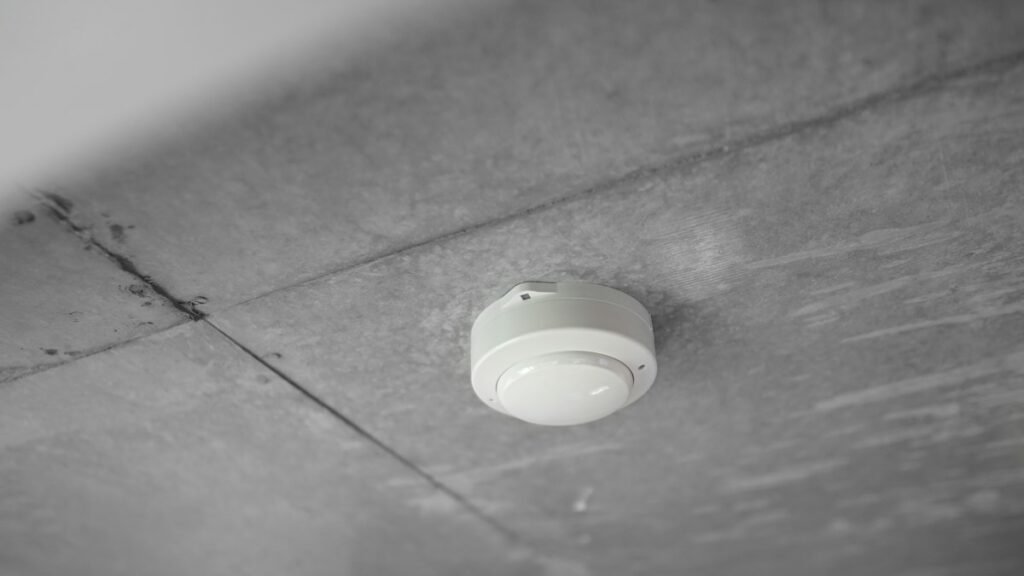
Updated: 15 November 2026. LD3 means alarms in the escape routes only. LD2 means alarms in the escape routes and in the rooms where a fire is most likely to start. LD1 means alarms throughout the home. These categories come from BS 5839-6, the British Standard for fire detection and alarm systems in homes. The letters LD stand for life protection in dwellings.
LD1, LD2 and LD3 compared
| Category | Where detectors are fitted | Level of protection |
|---|---|---|
| LD3 | Hallways, landings and stairs that form the escape route | Basic |
| LD2 | Escape routes, plus rooms that present a high fire risk, such as the kitchen and the main living room | Higher |
| LD1 | Escape routes and every room where a fire could start, except bathrooms and toilets | Highest |
Kitchens are normally fitted with a heat alarm, not a smoke alarm, to avoid false alarms from cooking.
What do the Grades mean?
The category says where the detectors go. The grade says what kind of equipment is used.
| Grade | Equipment |
|---|---|
| Grade A | A system with a central control panel, detectors, call points and sounders, as used in larger HMOs and blocks |
| Grade D1 | Mains-powered alarms with a sealed, tamper-proof back-up battery |
| Grade D2 | Mains-powered alarms with a back-up battery the user can replace |
| Grade F1 and F2 | Battery-only alarms, with a sealed battery (F1) or a replaceable battery (F2) |
A full description puts the two together, for example “Grade D1, Category LD2”. Alarms in Grade D systems are normally interlinked, so that when one sounds they all sound.
Which system does a rented property need?
The legal minimum for a rented home in England is a smoke alarm on every storey with living accommodation and a carbon monoxide alarm in rooms with a fixed combustion appliance. BS 5839-6 goes further and is the standard that fire risk assessors and councils use when they recommend a system.
- Single-household lets: the standard commonly recommends mains-powered, interlinked alarms to Category LD2.
- Smaller HMOs: councils often ask for a Grade D system covering the escape route, the kitchen and the bedrooms.
- Larger HMOs and blocks: a Grade A panel system is commonly required for the shared areas.
The exact system for a property is set by the fire risk assessment and, for an HMO, by the council’s licence conditions. Do not buy or fit a system from a general guide alone.
Testing and maintenance
Whatever the category, the alarms must work at the start of each tenancy, and faults must be repaired once they are reported. Panel systems need regular testing and servicing. Read fire alarm testing in HMOs and smoke and carbon monoxide alarm rules for landlords.
Frequently asked questions
What is an LD3 fire alarm system?
A system with detectors in the escape routes only: the hallways, landings and stairs.
What is an LD2 fire alarm system?
A system with detectors in the escape routes and in the rooms where a fire is most likely to start, such as the kitchen and the main living room.
What is the difference between LD2 and LD3?
LD3 covers the escape routes only. LD2 covers the escape routes and the high-risk rooms as well.
Do HMOs need LD2?
Many do, but the requirement comes from the fire risk assessment and the council’s licence conditions, not from the category name. See HMO fire risk assessment requirements.
Arrange a fire risk assessment or alarm check
See our fire risk assessment service and smoke and CO alarm checks, use Get a Quote or call 07506 892739.
This article provides general information for England and is not legal advice.